
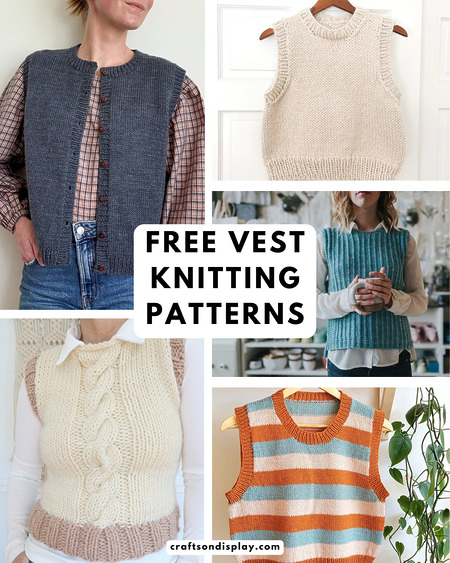
Vests – or “slipovers” if you’re feeling fancy – are having a major moment. They are the ultimate layering piece – you can throw them over a white button-down for a preppy look or wear a chunky one over a tee for peak cozy vibes. If you’re a knitter, vests are basically a superpower. They have no sleeves, which means they knit up twice as fast as a sweater and you don’t have to worry about the dreaded “sleeve island.”
In this post, we’re breaking down the best free patterns out there. Plus, we’ve got all the tips you need to actually finish your project and love how it looks.
Why Vests Are Perfect for Beginners
If you’ve only ever knitted scarves, a vest is the perfect next step. Here is why:
- No Sleeves: This is the big one. Shaping sleeves and sewing them on can be a nightmare for your first garment. Vests skip that entirely.
- Small Commitment: You’ll use less yarn than a full sweater. This makes it cheaper and faster.
- Skill Builder: You’ll learn how to shape armholes and necklines without being overwhelmed by a massive project.
How to Choose the Right Pattern
Not all vests are created equal. Before you hit “download” on that free PDF, think about what you actually like to wear.
Consider the Fit. Do you like a cropped, tight look? Or are you more into the “stole this from my grandpa” oversized vibe? Look at the positive ease mentioned in the pattern. Positive ease just means how much bigger the finished garment is than your actual body. If you want it baggy, look for at least 4-6 inches of positive ease.
Check the Construction. Some vests are knit in the round (like a big tube). Others are knit in flat pieces (a front and a back) and then sewed together.
- In the round: No sewing! But you might need circular needles.
- Flat: Easier to keep track of your rows, but you’ll have to learn the mattress stitch to join the sides.
The Best Free Patterns to Try Right Now
The “Everyday” Basic Vest
Look for patterns that use Worsted or DK weight yarn. These are mid-weight and very versatile. You’ll find lots of free “basic” slipover patterns that use simple stockinette stitch. These are great because they go with everything.
- See My Vest – Worsted weight yarn, free pattern by Emily Bolduan
- Carina Slipover, free pattern by Cookie the Knitter
- Sally Vest, free pattern by Annabel Williams
- Waterrock, free pattern by Jennifer Kelley
The Chunky Statement Vest
If you want instant gratification, go for a Super Bulky pattern – you can usually knit these in a weekend! They look modern and edgy.
- Open Trails Slipover, free pattern by Ashley Lillis
- Timbo Vest, free pattern by Gabriella Calderini
- See My Vest – Chunky yarn, free pattern by Emily Bolduan
- Heart Warming Vest, free pattern by Betsy Teitler
The Textured Cable Vest
If you’re feeling brave, try a vest with a single cable down the center. It adds a lot of “wow” factor without being as complicated as a full Aran sweater.
- Boogie Vest, free pattern by Amy King
- Simple cable vest, free pattern from A Box of Twine
- Forest Gem Vest, free pattern by DROPS design
Choosing the Best Yarn
The yarn you pick will make or break your vest. Color matters, but the fiber content and construction decide how it drapes, how warm it is, and how long it lasts. Here is how to pick the right match, along with the supplies I reach for every time.
Wool and wool blends. Wool is the gold standard for garments. It has natural bounce and elasticity, which helps your vest keep its shape without bagging out.
- Best budget all-rounder: A wool-acrylic blend gives you easy care, durability, and a soft feel. Lion Brand Wool-Ease is a great worsted blend for everyday knits that won’t break the bank.
- Best pure wool: If you want zero synthetic fibers, look for a 100% Peruvian highland wool like Cascade 220. It has great stitch definition and blocks like a dream.
Cotton and linen blends. Planning a piece for warm weather? Cotton or linen creates a crisp, breathable fabric with great drape. Just keep in mind that plant fibers have zero stretch, so they can feel stiff on your hands if you knit tight.
- Top pick: Try a chainette construction like Caron All Day Cotton Yarn. Because the yarn is constructed like a hollow knitted tube, it stays lightweight and doesn’t feel heavy on your shoulders.
Look at the ply to stop pilling. Friction happens constantly under the arms and at the sides of a vest. Single-ply yarns (one thick, lightly twisted strand) feel buttery soft in the skein, but they fuzz up and pill after a few wears.
Always pick plied yarn – meaning several strands spun tightly together. The higher twist locks the fibers in place and keeps your vest looking brand new for years.
Do not forget the right needles!
A smooth set of needles keeps your tension even and your hands happy.
- For slick stitches: If you want fast, smooth knitting for wool, grab ChiaoGoo Red Lace circular needles. The cables never kink, and the sharp tips make picking up stitches around armholes effortless.
- For slippery yarns: If you are working with slick cotton, wooden needles like KnitPro Symfonie / Lykke Driftwood give you the extra grip you need to stop dropped stitches.
Pro Tips for Your First Vest
Do Not Skip the Gauge Swatch. We know, swatching is boring. But a vest needs to fit your body, not your chair, so knit a 4×4 inch square first. If you have more stitches than the pattern says, your vest will be too small. If you have fewer, it’ll be a tent. Adjust your needle size until you hit the mark.
Practice “Picking Up Stitches”. Most vests require you to pick up stitches around the armholes and neck to add a ribbed edge. This is the part that makes a vest look professional. Watch a few YouTube videos on this before you start. It’s easier than it looks!
This video by ChristaCoDesign shows you exactly how to pick up and knit around an armhole:
Block Your Finished Piece. Blocking is just soaking your finished vest in water and laying it flat to dry. It sounds simple, but it’s magic. It evens out your stitches and makes the edges lay flat. It’s the difference between “I made this in my basement” and “I bought this at a boutique.”
Measuring for the Perfect Fit. Don’t just guess your size. Grab a measuring tape!
- Bust: Measure around the fullest part.
- Length: Measure from your shoulder down to where you want the vest to end.
- Armhole: If you have a favorite tank top, measure the armhole opening. You want to make sure your knit version isn’t too tight under the arms.
turn inspiration into action!
The best part about free patterns is that they are a blank canvas.
- Change the length: Make it a crop top or a long tunic just by adding or subtracting rows.
- Add stripes: Use up your scrap yarn to make a colorful striped version.
- Mix textures: Use a fuzzy mohair yarn held together with a plain wool for a high-end, fluffy look.
Knitting a vest is one of the most rewarding projects you can take on. It’s the perfect bridge between “beginner” and “pro.” Whether you want something chunky and cozy for winter or a light cotton layer for the summer, there is a free pattern out there with your name on it. So, grab your needles, pick a yarn that makes you happy, and start casting on. You’ll be wearing your new favorite layer before you know it!
More knitting fun! 15 best free projects for gifting and destashing. Small triangular scarf knitting pattern.
very nice, thankyou
How do you get the free pattern? ,please.