
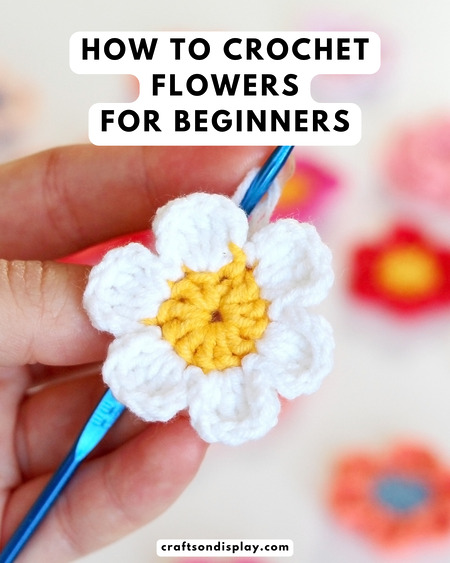
Crocheting flowers is like a little bit of everyday magic. You start with a stray scrap of yarn and a hook, and a few minutes later, you have a garden that never wilts.
Whether you are hunting for a chill weekend project or finally want to clear out that mountain of yarn scraps, making flowers is the perfect entry point. These tiny projects give you that hit of instant gratification we all crave. They are portable enough to toss in your bag, cute as can be, and surprisingly versatile for home decor or accessories.
In this guide, we are diving into everything you need to know to start crocheting flowers, from the basic tools to advanced tips for keeping your petals perfect.
Supplies checklist
Before you start, grab these essentials. You do not need much to get going.
- Yarn: Cotton is best for definition, but acrylic works for soft petals.
- Crochet hook: Check your yarn label for the recommended size.
- Yarn needle: Essential for weaving in ends.
- Scissors: Sharp ones make a difference.
- Stitch markers: Helpful for keeping track of rounds.
- Optional: Floral wire or fabric stiffener for 3D displays.
The basics of crochet flowers
Most beginner patterns start in the center and work outward. You will usually work in rounds. If you are brand new, start with flat patterns – they are easier to handle.
Once you get the hang of tension and basic stitches like the double crochet, you can move on to layered or 3D designs.
Can you start crocheting a flower without a magic ring?
Yes, absolutely. The magic ring is great because it pulls tight with no hole in the middle. But it can be tricky for beginners. If you hate the magic ring, just chain 4 and join with a slip stitch to form a ring. Then, work your first round of stitches into that center hole. It works perfectly fine for most patterns.
Types of crochet flowers
There are three main styles you will encounter:
- Appliques: These are flat flowers. They have a finished back and are meant to be sewn onto something else.
- 3D or Stuffed: These are dimensional. Think of a small flower keychain or a stuffed tulip.
- Layered: These use multiple rows of petals stacked on top of each other for a full, fluffy look – poinsettia, popcorn flower, water lily.
Patterns to try right now
Easiest beginner daisy: Simple Daisy
This pattern is the gold standard for beginners. It uses basic stitches to create a classic white and yellow daisy. The instructions are very clear and easy to follow. It is perfect for learning how to change colors in the middle of a project. Here’s another daisy flower design, and another one.
Best scrap-busting rose: Rolled Rose
This is a clever “cheat” pattern. Instead of working in a circle, you crochet a long, wavy strip. Then, you simply roll it up and sew the bottom to create a stunning 3D rose. It is fast, fun, and looks professional without the stress.
The most versatile flower: the simple five-petal applique
If you want one pattern that does it all, this is it. It is flat, fast, and fits anywhere. You can make it tiny with thread for earrings or huge with chunky yarn for a pillow accent. Because it is a basic shape, it layers perfectly under larger flowers to add depth and color. Another easy 5-petal flower pattern.
How to use your crochet flowers
Do not just let them sit in a bowl. Put them to work!
- Accessories: Sew them onto beanies, headbands, or scarves.
- Home Decor: Glue them to picture frames or make a floral garland for a nursery. Or, attach them to floral wire to create a “forever” bouquet for a vase.
- Gift Toppers: Use a crochet flower instead of a plastic bow on a birthday present.
- Jewelry: Small flowers made with lace weight yarn make adorable earrings.
Tips for professional looking flowers
The difference between a “homemade” flower and a “handmade” flower is in the details.
- Watch your tension. If you pull too tight, your petals will curl. If you are too loose, the flower will look floppy.
- Use the right yarn. Cotton yarn shows off stitch definition. This makes the petals look sharp and clean.
- Secure your ends. Flowers get handled a lot. If you do not weave in your ends properly, they will unravel.
How to make sure your flowers won’t unravel
This is the biggest fear for beginners. When you finish your flower, leave a long tail. Use a yarn needle to weave that tail through the back of the stitches. Go one way, then turn around and go back the other way.
This “lock” prevents the yarn from sliding out even if the item is washed. For extra security, you can add a tiny drop of fabric glue to the knot.
Frequently asked questions
Which yarn is best for flowers?
Mercerized cotton is the favorite. It has a slight sheen and holds its shape really well. It does not get fuzzy over time like wool or acrylic might.
How do I make my petals stand up?
If your 3D flowers are drooping, try a smaller hook size. This creates tighter stitches. You can also spray them with a bit of starch or fabric stiffener once you are done.
Can I wash crochet flowers?
Yes, but be gentle. If they are attached to a garment, wash on a delicate cycle. If they are standalone, hand wash them in cool water and reshape them while they are damp.
What is the fastest flower to make?
A basic five-petal puff flower is the fastest. You can usually finish one in about three minutes once you know the stitch.
Creating your own yarn garden is a rewarding way to practice your skills. You get to play with colors and textures without committing to a massive project like a blanket. Whether you are making appliques for a jacket or a bouquet for a friend, these tips should give you the confidence to start. Grab your hook, pick a bright color, and start stitching. You will have a handful of blooms before the coffee gets cold. Happy crocheting!
More crochet fun! Crochet flower bouquet blanket. Easy color block checkered scarf.